

The Importance of Fall Blooming Lavender
Every year, many plant customers ask whether they can harvest their fall-blooming lavender. Although it may be tempting to pick these beautiful flowers, it is best to leave them on the plant.
Certain cultivars, especially the double bloomers such as Lavandula angustifolia varieties like ‘Buena Vista’, ‘Irene Doyle’, ‘Violet Intrigue’(Lavang 21), ‘Wyckoff’ , ‘Thumbelina Leigh’ and ‘Royal Velvet’, reward gardeners with vibrant and flush blooms in the fall. Even varieties known for sporadic fall flowers, such as ‘Folgate’, can tempt gardeners to harvest. As a general practice, I do not harvest lavender flowers after September, though the exact timing depends on your growing region. I always leave blooms that appear in October and November, and often those that emerge in late September as well. This year, the harvest was so abundant that it extended into early September.
I harvested Lavandula x intermedia ‘Super’ (a single-blooming variety) for distilling essential oil and hydrosol, with my final harvest of ‘Super’ occurring on September 3rd. The last harvest for ‘Buena Vista’ was on September 5th. ‘Forever Blue’ was last harvested in mid-August, yet this variety rebloomed later in October.

Lav. ang. ‘Thumbelina Leigh’ Photo taken in November
Supporting Pollinators
The fall blooms attract a variety of pollinators, providing them with essential food before they enter hibernation for the winter. Leaving these blooms is a way of giving back to nature by maintaining a habitat for these creatures. Often, we don’t consider where pollinators go during the colder months, but they rely on sheltered spots to survive the winter.
- New queen bumblebees, after mating, find protected places underground to hibernate until spring.
- Many native bee species overwinter as larvae or pupae either underground or within hollow plant stems, which serve as natural shelters.
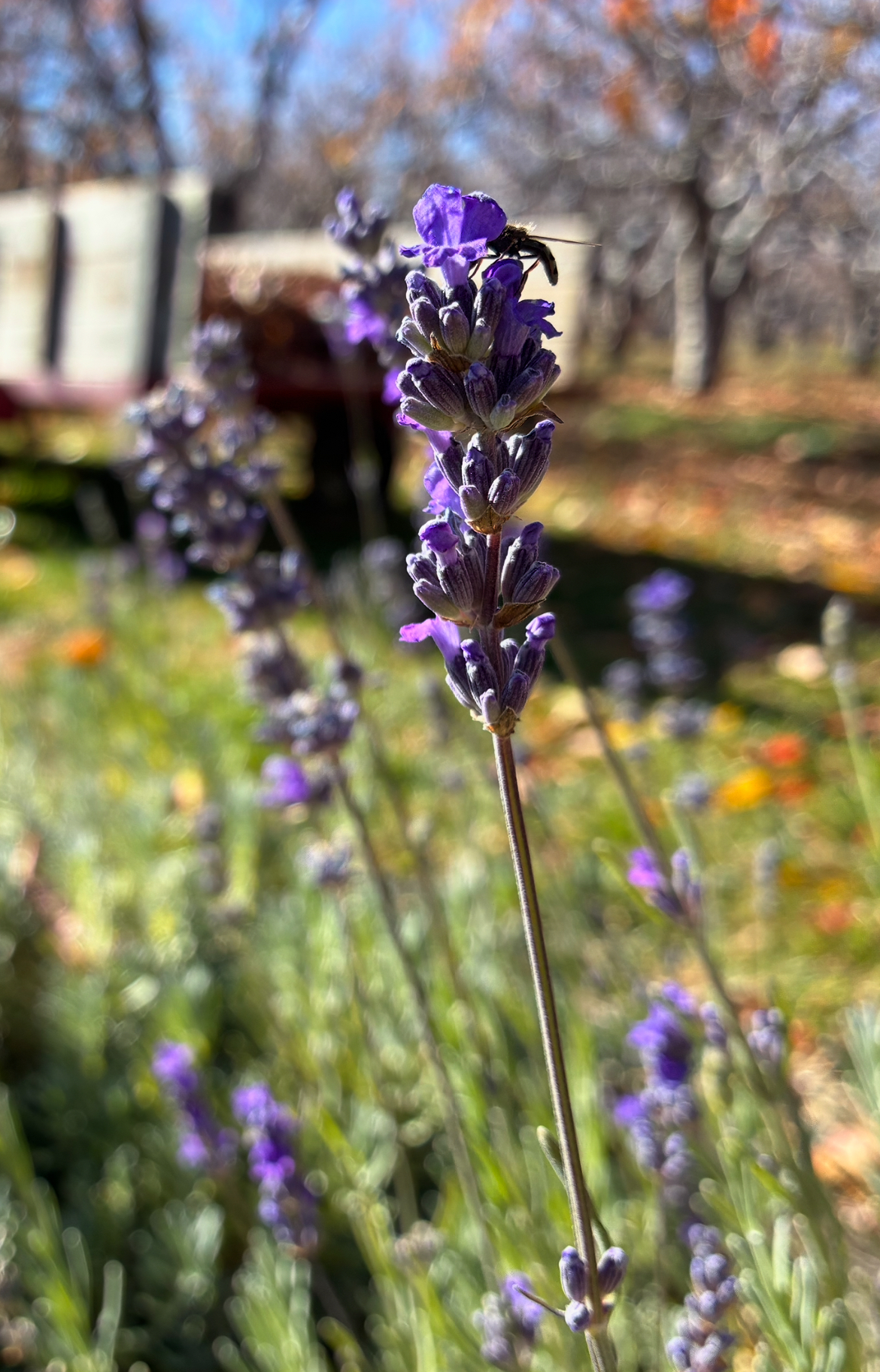
Lavandula angustifolia ‘Irene Doyle’ Photo taken in November
Protecting Your Lavender and Local Wildlife
Leaving the blooms and long spikes on lavender plants not only supports pollinators but also provides an extra layer of protection for the plants themselves. Lavender is susceptible to dieback from sudden cold snaps and extreme temperatures in the fall, but retained vegetation can help shield the plant. If you are gardening or farming in USDA Zone 6 or below, it’s best to leave the blooms and enjoy the contrast of changing leaves against the purple flowers.
Enjoy your Fall Landscape
In addition to lavender, many plants that re-bloom in the fall can truly impress, especially in colder zones. Autumn is a time when gardening tasks often slow down, giving you more opportunities to appreciate your surroundings and tackle fall chores at a relaxed pace. During this season, you can enjoy both annuals and perennials that provide vibrant color and interest alongside your fall-blooming lavender.
Some of the standout annuals and perennials that offer a delightful display in the fall include marigolds, calendula, red valerian, assorted salvias, poppies, violas, dusty miller, dwarf yarrow like little moonshine, mums and bachelor buttons. These plants add variety and beauty to your garden, making the autumn landscape even more enjoyable as you savor the transition into cooler weather. Share with us your favorite fall blooming flowers!
Spring Cleanup and Ecosystem Health
When spring arrives, you can prune back the fall growth and shape the plant as desired. By keeping spent blooms and stems intact during winter, you preserve food sources and create vital shelter for beneficial insects. This practice not only helps the local ecosystem but also encourages healthy pollinator populations for the next growing season.
If you want to explore the bloom sequence of different lavender cultivars check out her new book Lavender for All Season, A Gardeners Guide to Growing and Creating with Lavender Year Round